Navigating PFAS Flux Characterization: A Guide to High Resolution vs Traditional Sampling Technologies
By: Casey MoorePer- and polyfluoroalkyl substances (PFAS) have been used or been found in many applications since the 1930s, including consumer, industrial, and military products, metal plating, fire training facilities, response to tanker spills, wastewater sludge application on farms, and as a result is ubiquitous in the environment.
PFAS contamination of groundwater is reported every day in the news. As the public grows ever more aware of the dangers of this emerging contaminant, we’re seeing prioritization from EPA and state governments, e.g., New Jersey, regarding regulations specifying sampling and remediation requirements.
While this is great news for our environment, it means environmental consultants who have not worked on PFAS-contaminated sites for their clients, are going to have to play catch-up with today’s best practices.
There is a lot to know about current characterization technologies and best practices in working on PFAS sites, and it can be overwhelming. In our on-demand webinar, “PFAS 101: Characterization Technologies and Best Practices,” our experts cover the basics of traditional site characterization for PFAS-contaminated sites.
In this blog post, we will discuss direct push characterization technologies to define PFAS groundwater flux, a critical design parameter for in situ reactive barriers or pump and treat systems.
Characterization Technology for PFAS Flux: In-Well Flux Canisters or WaterlooAPS™
In the past, the characterization of PFAS groundwater followed traditional methods from direct push technology or installation of monitoring wells, however these data are not sufficient in resolution to develop a cost effective in situ remediation approach. Traditional groundwater characterization is great for pollutants like solvents or benzene with low parts per billion standards, however, with PFAS having low parts per trillion standards, it’s a whole new ball game to be able to quantify PFAS flux and at the same time eliminating cross contamination.
Understanding PFAS flux has become a key design parameter and a data collection parameter for in situ remediation systems. There are both in-well and direct push sampling technologies available. In-well flux cannisters typically are used where Direct Push cannot achieve target depths, or where discreet groundwater seepage velocity measurements are needed to support barrier longevity. However, installation of new wells can be expensive and may become future compliance locations.
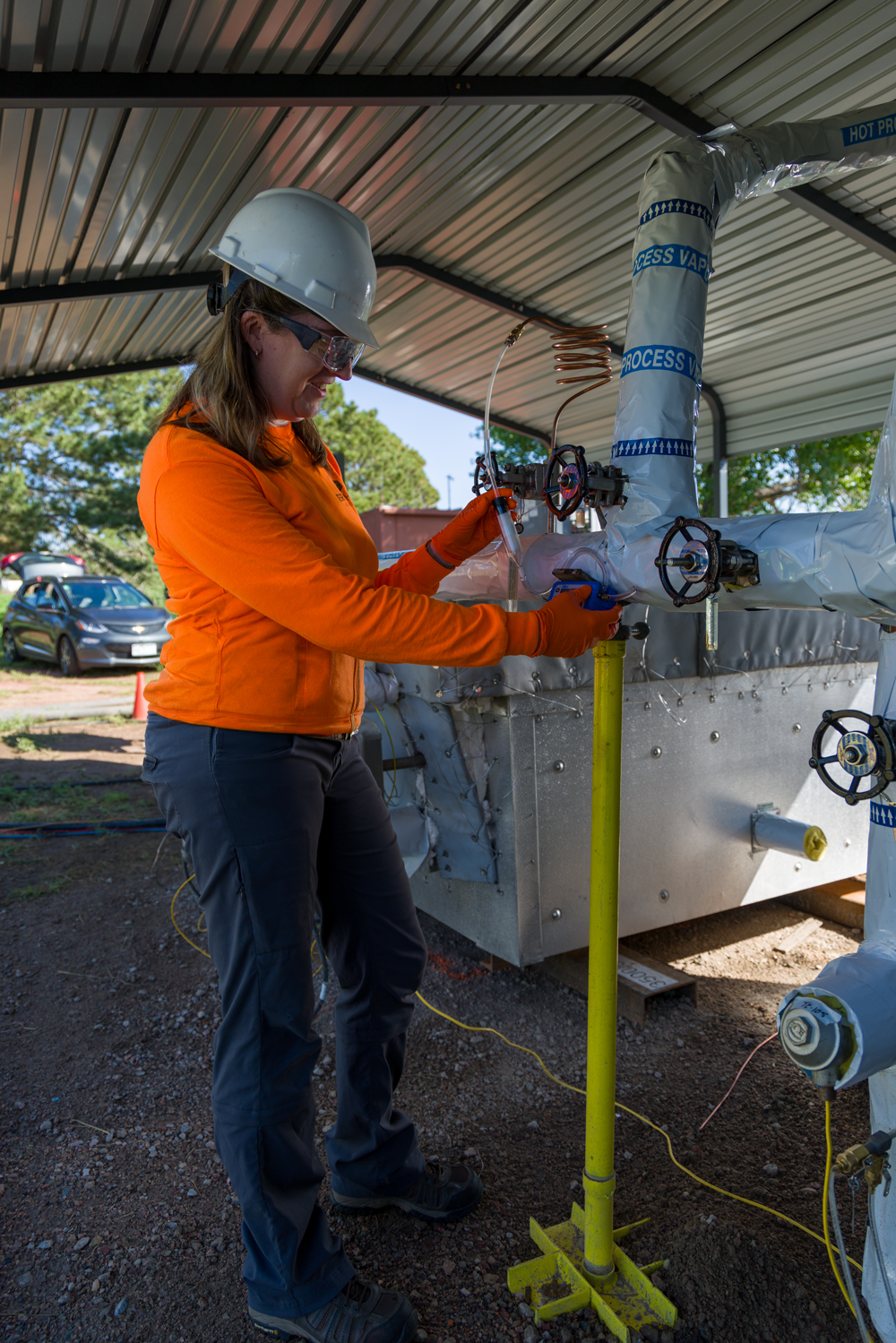
Alternatively, where direct push can reach target intervals, sampling with Cascade’s Waterloo Advanced Profiling System™ (WaterlooAPS), is a cost-effective option. It is capable of measuring hydrostratigraphic data while collecting multiple PFAS groundwater samples on a single advancement.
WaterlooAPS is ideally designed for PFAS groundwater flux sampling due to the real-time log of hydraulic conductivity and relative permeability (K) of the soils as the tool advances through them. PFAS Free water is injected into the subsurface from a pressurized reservoir using flow rates and back pressure collected by an inline flow meter and pressure transducer. With this real-time data, the operator can determine the best intervals to stop, e.g., transmissive zones, during one push and collect a defensible low flow groundwater sample. The discrete sample collection is what also sets this tool apart from other direct push characterization methodologies, e.g., Geoprobe’s Groundwater Sampling technology SP16, SP22 that could experience cross contamination in the same borehole.
Traditional Sampling Best Practices to Prevent PFAS Cross Contamination
When it comes to best practices, we assembled an internal guidance document for dealing with PFAS. Usually, the consultant, regulatory agency, or site owner directs the on-site protocols, however if not developed for a specific project, we make sure that our teams are very familiar with our best practices to avoid cross contamination.
Cascade conducted a study in 2017 to look at common components in the drill rig and associated equipment that would have the potential to contain PFAS. We identified Teflon, Fluon, and Viton, among others, in these components. We redesigned the equipment to remove all Teflon and LDBE components from the system, including all valves and pump tubing. We also replumbed the system to allow for seamless collection of groundwater samples right into PFAS sampling bottles.
Our PFAS guidance includes a list of items that are prohibited or should not be used and a list of preferred items to use. For example, instead of PTFE/Teflon®-containing pipe thread lubricant, we use Bio-Lube or other vegetable- or bio-based products. What’s on the list includes equipment as well as clothing and hygiene. Do not wear new unwashed clothes (but also don’t wear clothes that have been washed with fabric softener); do not use sunscreen with PTFE (the word “fluoro” appears in the ingredient list) but use natural or organic products. And if you use a smart phone, you must keep it out of the sampling zone and wash your hands after using it.
Cascade also relies on equipment rinse blanks to ensure that contamination doesn’t come from the equipment. The water used in the drilling process itself is either replenished in a stainless-steel reservoir from a certified PFAS-free water source on client sites or filled with water verified by analytical laboratories certified as PFAS-free.
New ASTM Standards and Phase 1 Investigation Drivers for PFAS Characterization
In March 2022, the EPA adopted a revised ASTM standard (E1527-21) that for the first time included a reference to PFAS. These standards would have a significant impact on a wide array of entities including investors, lenders, bankers, insurers, and any parties contemplating mergers and acquisitions.
To learn more about PFAS, watch our on-demand webinar, “PFAS 101: Characterization Technologies and Best Practices.”
About the Author

Casey Moore
Operations Manager & Service Line Leader, Site Characterization
Casey Moore is an HRSC service line leader and Operations Manager at Cascade with 12+ years of experience in the industry. He has managed a wide variety of complex projects utilizing HRSC tools in Cascade’s toolbelt including WaterlooAPS, MIP, OIP, UVOST, HPT & CPT.
Casey assists clients and consultants to select the best method for specific contaminant delineation, from which data deliverables are invaluable to efficiently and cost effectively design and optimizing remediation plans.
Join our newsletter

A bimonthly email with the latest expert insights in drilling and remediation